My child won’t flush the toilet or wash their hands. It’s NOT defiance; here’s what’s really going on.
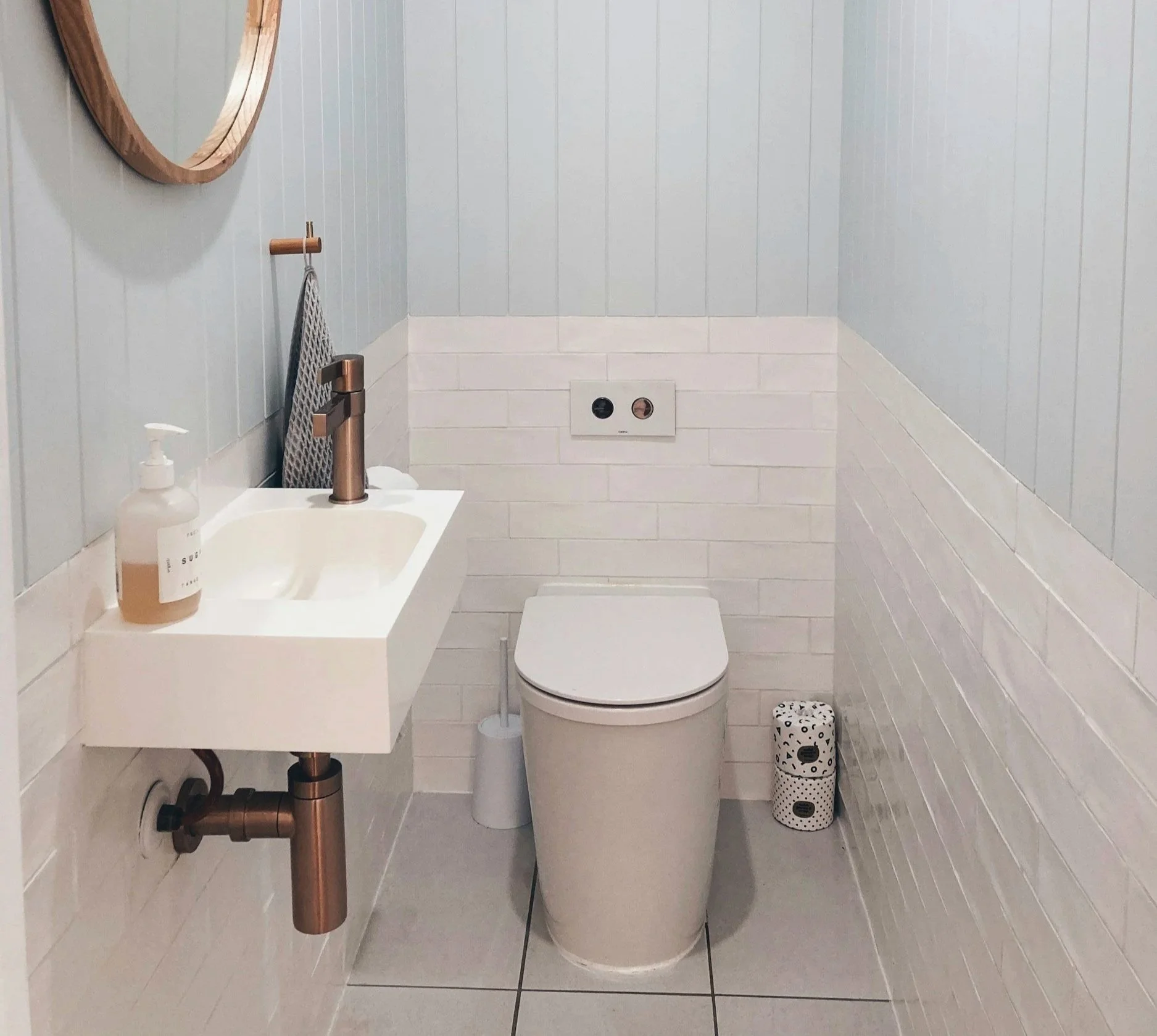
You’ve told her a hundred times. You’ve asked nicely, asked firmly, reminded her each time, and somewhere along the way started to wonder whether you’re simply invisible. And yet, again, she’s bounced out of the bathroom without washing her hands or flushing the toilet, completely unbothered, already on to something else.
Before you conclude that your child is ignoring you on purpose, I want to offer a different explanation. One that is far more likely, and far more hopeful. It’s not defiance. It’s not laziness. What you’re most likely seeing is a working memory as part of Executive Functioning challenge, and once you understand what that means, the whole picture changes.
Why hygiene routines are surprisingly hard for some children
For most of us, washing hands after using the toilet has become automatic; we no longer think about it. But for a child whose working memory is still developing (or developing differently), nothing is automatic yet. Every routine has to be consciously held in mind, step by step, every single time.
“It’s not an inconsistency in your parenting”
Now add in the fact that your child is almost certainly hyper-focused on something else entirely. The game she was midway through. The story in her head. Her attention is already somewhere else before she’s reached the bathroom door, which means the steps inside it simply don’t stand a chance. This isn’t a character flaw. It’s a capacity issue.
“But surely she knows by now?”
This is what tends to baffle parents most. You’ve been going over this for months, possibly years. Surely it should have gone in by now?
Here’s the thing: repetition alone doesn’t build a routine if the working memory needed to hold and execute it isn’t yet strong enough. It’s a bit like pouring water into a cup with a hole in the bottom, it’s not that the water is wrong. The cup needs to change.
“Children with Executive Functioning difficulties often can’t see the bigger picture”
One telling sign: if your younger child has absorbed these routines without the same effort, it’s not inconsistency in your parenting. It’s a difference in capacity, and that is something we can work with.
What’s actually going on in the brain?
Executive Functioning is the brain’s management system, responsible for planning, sequencing, self-monitoring, and remembering to follow through. A hygiene routine, however simple it looks to us, requires a child to hold the task in mind, resist the pull of whatever else has their attention, move through each step in order, and notice when they’re done. That’s a lot to ask of a brain already at capacity. When that capacity is exceeded, children don’t fail gracefully; they simply move on, entirely unaware that something was left undone.
What actually helps
The most effective short-term strategy is to take the memory load off altogether. Instead of relying on your child to remember the steps, make the steps visible. A simple visible chart to prompt each step. When stuck on the bathroom wall, pictures rather than just words, means your child doesn’t have to hold the sequence in their head. They just look at the wall and only think of one thing at a time.
Crucially, let your child help make it. Let them colour it in and choose where it goes. A child who has ownership of the chart is far more likely to use it. Keep it chunked and simple: “three jobs in the bathroom” is far more manageable than an open-ended list. Children with Executive Functioning difficulties often can’t see the bigger picture, the visual prompt gives them both the detail and the context without having to carry it all in their head.
And Beyond the Chart?
Visual strategies are a brilliant workaround, but they don’t address the root cause. If your child’s working memory is genuinely weak, strengthening it directly is the most powerful thing you can do, because the gains don’t just show up in hygiene routines. They show up at school, in friendships, in emotional regulation, and in independence.
Working memory can be trained. With the right programme, matched to your child’s temperament and anxiety levels, meaningful progress is absolutely possible. I’ve seen children make the equivalent of two years’ progress in five weeks, and watched it ripple into every corner of their daily life.
So if you’re exhausted from repeating yourself, please know this: your child is not choosing to ignore you. They are doing their best with the capacity they currently have. And that capacity, with the right support, can grow.
Is every school day a struggle? As a parent, you may feel exhausted and on this journey alone. Each year you see the gap getting wider. You need to do something - change the approach, help your child learn for themselves, find a way to turn this around - to help while you can - do this NOW. the first step is free.
