
Why can't I concentrate?
Why concentration is hard for people with dyslexia and ADHD
Everyone struggled, didn’t they?
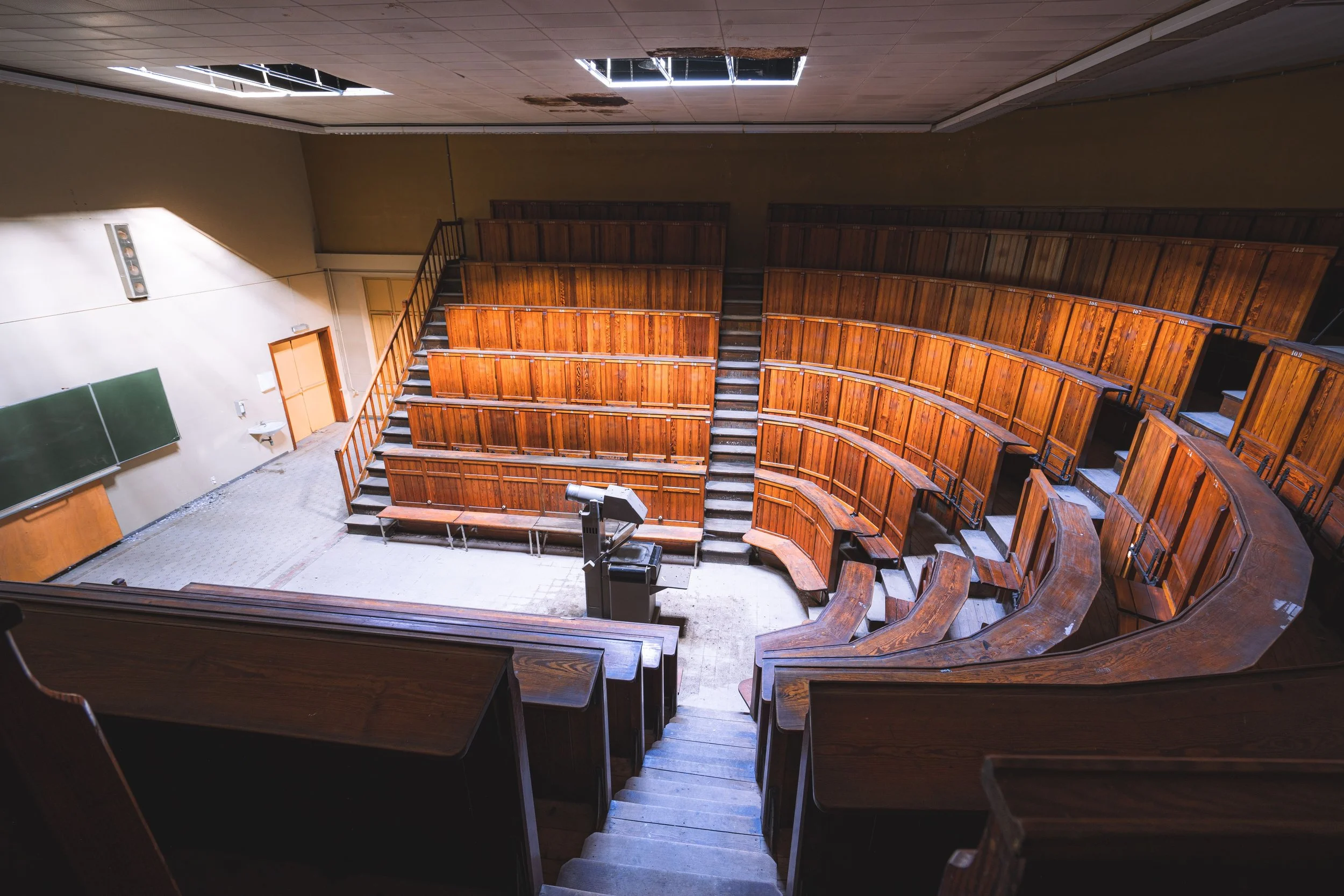
I remember my very first Sociology lesson. It was in the humanities block, a double story building with metal frame windows, the type of windows you saw in old hospitals. The block was North-facing, even in early September the classroom felt cold. In this first introduction to Sociology, we were asked by our teacher to draw a picture of how we each thought poverty looked, ‘our visual impression,’ of poverty.
“I didn’t realise I needed pin-drop silence to concentrate.”
Harry Jones, the curly haired protégé on table one, was not only an amazing student but an accomplished artist. He set to work drawing a famine victim, a child with tearful eyes and a big empty stomach. Harry’s best friend Colin, also on table one, was also drawing another famine victim, a girl holding a younger child on her hip. Harry’s father was an airline pilot; Harry with all his talent, was destined for great things.
“Harry’s father was an airline pilot... he was destined for great things.”

Everyone struggled, didn’t they?
I, on the other hand, was more interested in what everyone else was doing and looking out the window; my own sheet was empty. ‘Things’ were always in the pipeline, never today, never now. I didn’t realise I needed pin-drop silence to concentrate. Yes, I could knock out a good drawing, but I couldn’t do it in a noisy environment. School was a drain of my energy. All the work that should have been done in school was done during the evening. Luckily for me, there were no mobile phones, tablets, or even the Internet to add further to the list of distractions. Nor was failure ever an option; university beckoned.
There I was doing a double shift of school work and homework every evening. Nobody stopped to check what I was doing, when it was being done or to see if I was struggling. It was normal, everyone struggled, didn’t they?
We all have differing capacities*

I wasn’t that bad so there was very little to fix. I needed to make do, plod on as normal.
Everyone has capacity; I was no Harry Jones of this world, but I read somewhere humans only use twenty percent of their brain’s full capacity. Well I won’t lie. My 20% was running at full pelt, it was flat out. How does one make adulthood with this pre-disposition and not get depressed? In a time before self-help books, the Internet, and dyslexia testing, I didn’t have a clue that there might be a bigger problem. We were told ‘not to be lazy,’ to get on with things and I did just that. Always my inadequacies were down to not exerting enough will-power or determination.
When I took up an administrative job, after scraping through my A-Levels, one of my tasks was to type out delivery notes. It was here my boss, a stout fellow, Peter Thomson, with a sergeant major moustache curled at the edges, would frown at my typing. He would scribble over “Brain Flechter” and correct it to Brian Fletcher, our delivery driver. Neither Brian nor Fletcher were spellings I had learnt by rote. Luckily, Peter did not have to put up with me for too long. But, he was special because he was the first to realise there was some discrepancy between my written language and spoken language skills. Peter knew the problem was not of my own making. All those years of handing in homework, passing exams and no one picked up on my poor spelling, ever. At university I realised I needed to find out more about what Peter had said, about something called dyslexia. A university lecturer tested me, and said I was borderline dyslexic. It was not that bad by their standards. I wasn’t that bad so there was very little to fix. I needed to make do, plod on as normal. In later years I discovered I was not ‘borderline dyslexic’ but a mixture of dyslexia and ADD, but by then I had my strategies in place.
“I was not about to use my limited energy in negative pursuits.”
How does one survive with dyslexia?
How does one do it, survive with dyslexia? Where is the vestige of hope poured? My saving grace was a few strategies I still hold dear to this day:
1. A daily journal. Every night I would write my list for the next day, vocalise my disappointment on the day, and vow to do better tomorrow.
2. Grit. Knowing if I worked hard enough, put in the hours, used my brain to the fullest capacity and wrote down things that I would normally forget in a pocket size notebook, I could get by.
3. A Feeling that everything is learnable. Having a growth mindset mentality.
4. And finally one law of thermodynamics. Bizarrely enough, this was my absolute ethos at school and beyond. “Energy cannot be stored nor created; it can only change from one type to another.” I was not about to use my limited energy in negative pursuits; it would not be fruitful.
I don’t know where I got my motivation, I knew from early days that if I didn’t work hard I would end up in my own version of poverty. Not in famine-swept Africa but in an often cold and damp country where it was invisible to most.
Adapted with the kind permission of Charles, an adult with dyslexia.
Charles has completed the Safe and Sound Protocol in 2018 and repeats this therapy every 8 or 9 months as required.
If you are an adult struggling with dyslexia let’s have a chat.
*While sometimes it may feel like there is some amount of our brain capacity that we are locked out of, in truth, your brain is always active - even when you are asleep! Research has shown that we can increase our brains’ capacity well into adulthood, which is called neuroplasticity.
Dyslexia? Dyspraxia? ADHD? ASD? Speech & Language? Developmental Delay? Anxiety?
Is every school day a struggle? As a parent, you may feel exhausted and on this journey alone. Each year you see the gap getting wider. You need to do something - change the approach, help your child learn for themselves, find a way to turn this around - to help while you can - do this NOW. the first step is free.
