When bright children have convergence insufficiency
When bright children have convergence insufficiency
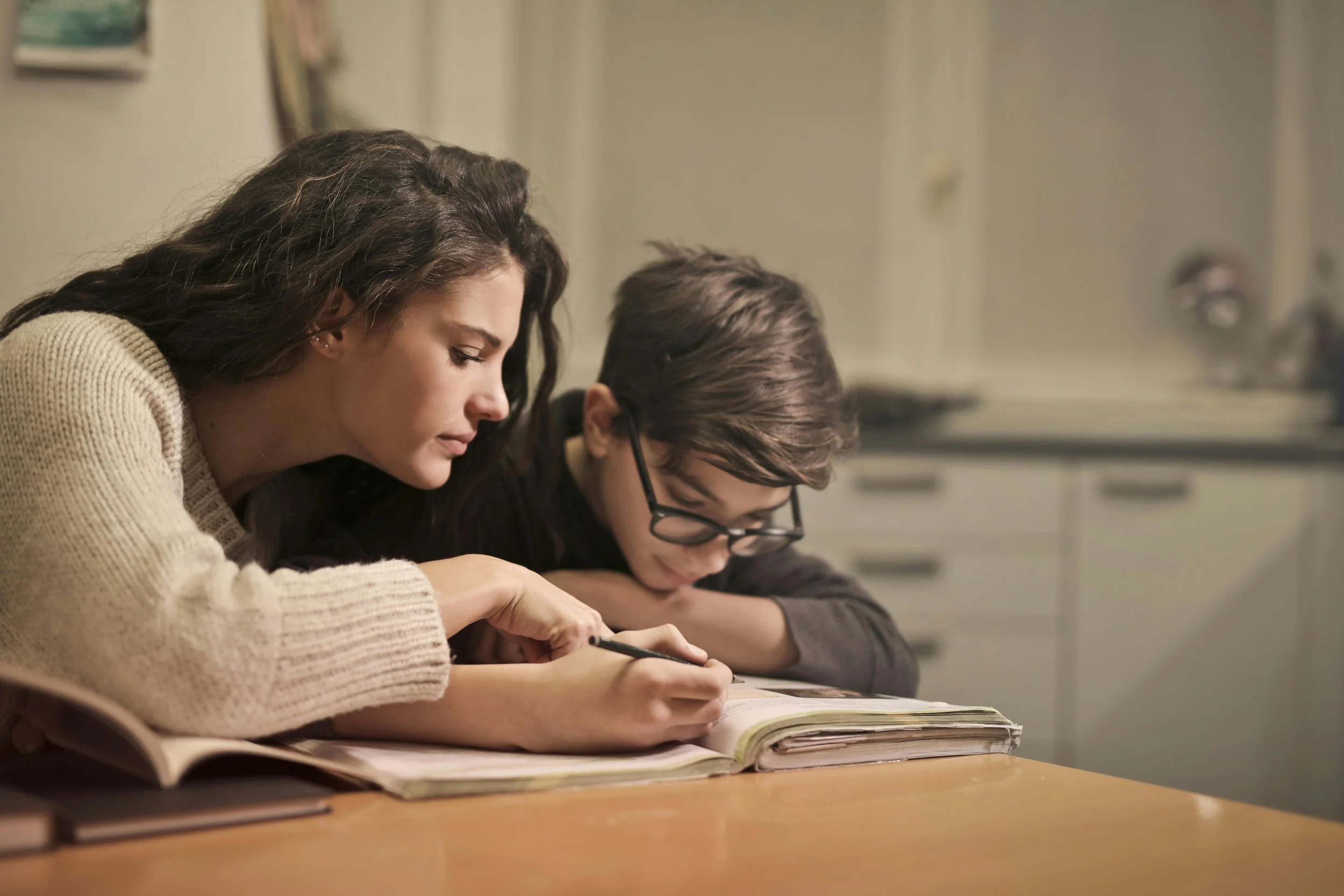
Children need to have regular eye tests, especially in the early years. When a parent tells me their child is good at maths calculations, but the transfer to paper is not always consistent, I always want to find out more. This year, a parent came to me about their child's maths, and specifically the daily Kumon papers. The parent reported that the work starts accurately but declines towards the end.
It didn't make sense to the parent nor to me. Kumon relies on repetition to build stamina. The idea is that doing the same thing over and over helps the individual become more accurate and faster.
At first, the parent assumed fatigue was the cause, so they tried the same work first thing in the morning. They saw the same pattern: correct work followed by incorrect work. When tested aurally, their child was accurate every time; the mistake occurred only in written work.
“Their little boy could compensate for a while, but he relied on only one eye to complete schoolwork. ”
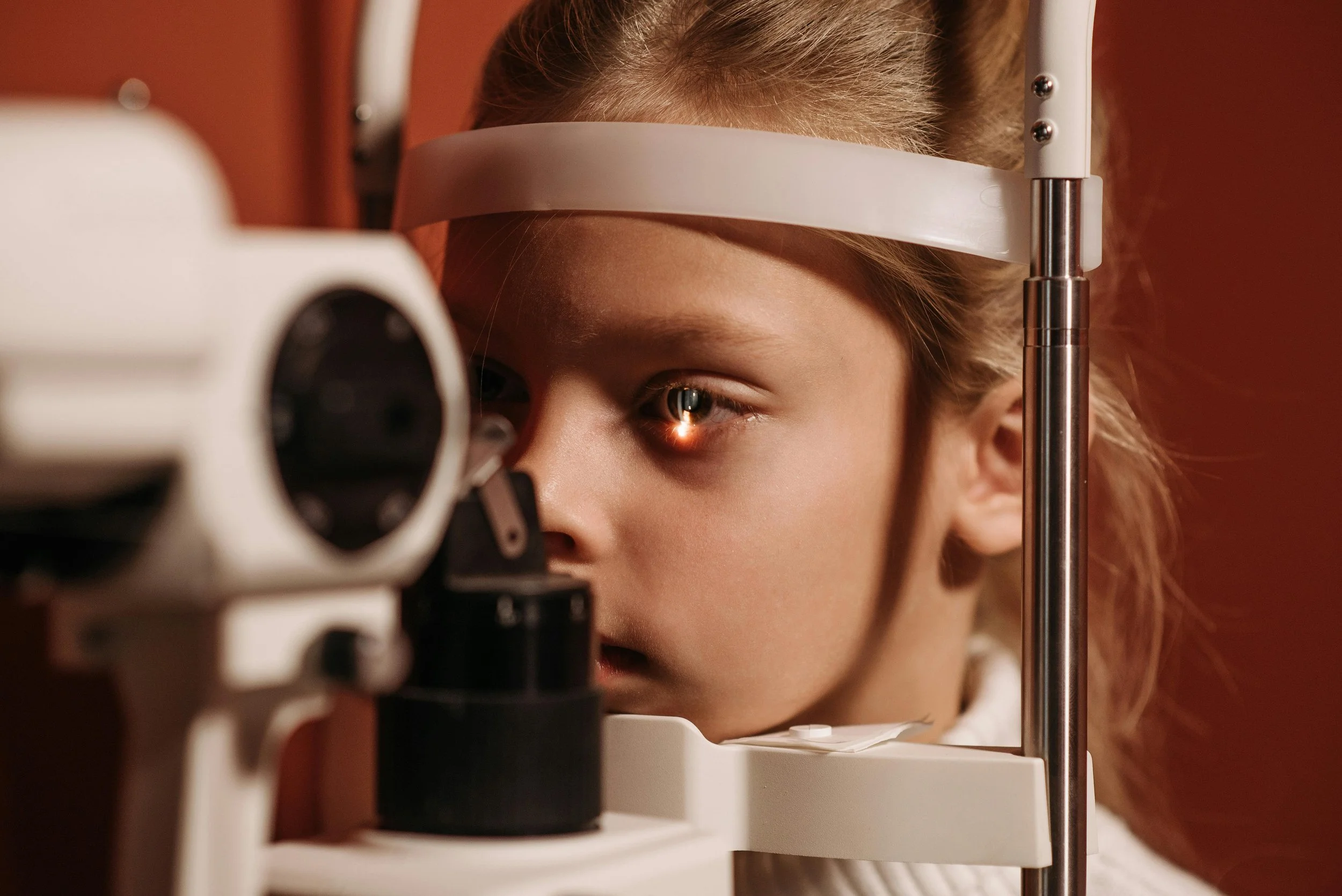
By the time they came to me for a free consultation, these parents were genuinely puzzled. I asked them to bring their child onto the Zoom call so we could do a simple eye test—not to check for short-sightedness or long-sightedness, but to see how the eye muscles moved when following a moving pencil.
On the call, when the parent (under my instruction) checked their child's eye movement, their son's left eye moved toward his nose, while the right eye remained still. Their optician hadn't checked this sort of movement because it fell outside their usual scope of practice. The issue in this instance was convergence insufficiency, which prevents the eyes from working together to focus when reading or writing.
Their little boy could compensate for a while, but he relied on only one eye to complete schoolwork. Eventually, tiredness set in, and mistakes increased. The Kumon Maths homework highlighted the problem clearly because their child needed to complete around ten pages of sums each day, which was a big challenge.
Parents: check your child's eye convergence
How to check for convergence insufficiency. Take a pencil and hold it at arm's length from your child's nose. Move the pencil slowly towards their nose and ask them to keep looking at it. As the pencil moves closer, theireyes should both move inward at the same rate. If they do not move inwards, the following symptoms may also coexist.
Common symptoms of convergence deficiency
Tired or sore eyes
Blurry vision
Double vision
Headaches
Trouble concentrating
Difficulty catching and throwing a ball
Why can't my child catch a ball?
Helping the parent find a solution
I was unable to support this family directly, as they lived in Portugal. My suggestion for helping with convergence insufficiency with in-personone-to-one sessionswas not an option for them. Instead, the next step was to see a specialist optician for a formal diagnosis of convergence insufficiency. Their seven-year-old began wearing an eye patch and doing daily exercises to strengthen the weaker eye. When these exercises didn't help, they moved to prism glasses. The glasses improved things, but they still didn't solve everything.
Six months later, the parents returned for another consultation. Although their son's Kumon Maths errors had halved, literacy remained a concern. Copying from a book, handwriting size, and particularly reading speed continued to be a challenge. Their little boy was painfully slow—and they wanted to know if I could help. I suggested working remotely and recommended my silent speed-reading program.
“The silent speed-reading program builds the eye muscles needed for tracking across the page. ”
Silent speed-reading program
Specialist opticians developed the silent speed-reading program offered by Raviv Practice London, and it was exactly what this seven-year-old needed. He completed a placement test and then worked every day for 25 minutes on eye exercises that challenged his horizontal eye movements. These movements, called saccades, must be smooth and controlled. Poor saccades cause the child's eyes to jump words, move backwards, or lose their place, which weakens comprehension—precisely what the parents had observed. Their child's eyes now converged much better than before but didn't move efficiently to understand written text.
The silent speed-reading program builds the eye muscles needed for tracking across the page. As accuracy improves, speed naturally increases. The eye tracking exercises are gamified and fun to do.
Seven signs parents should not ignore in children with eye-tracking issues
Glowing results
After two weeks of working from their home in Portugal, the parents began to notice changes. Their son liked the eye-tracking exercises and enjoyed his daily tasks. My next step was to introduce reading material: short stories at the seven-year-olds (tested) reading level. His reading speed rose from a slow 95 words per minute to 110 in three weeks, and within eight weeks it reached 120. By the end of the programme, he read at 155 words per minute—above average for his age—with 80% comprehension. His vocabulary also rose above his chronological age.
Over 12 weeks, his reading level increased by 2.5 years, with me checking in and offering guidance every couple of weeks.
However, it's important to remember that not all opticians test for convergence problems or binocular stability (how the eyes move and work together). It is a grey area, happy to discuss further.
Dyslexia? Dyspraxia? ADHD? ASD? Speech & Language? Developmental Delay? Anxiety?
Is every school day a struggle? As a parent, you may feel exhausted and on this journey alone. Each year you see the gap getting wider. You need to do something - change the approach, help your child learn for themselves, find a way to turn this around - to help while you can - do this NOW. the first step is free.
