
Maths tools for better problem solving
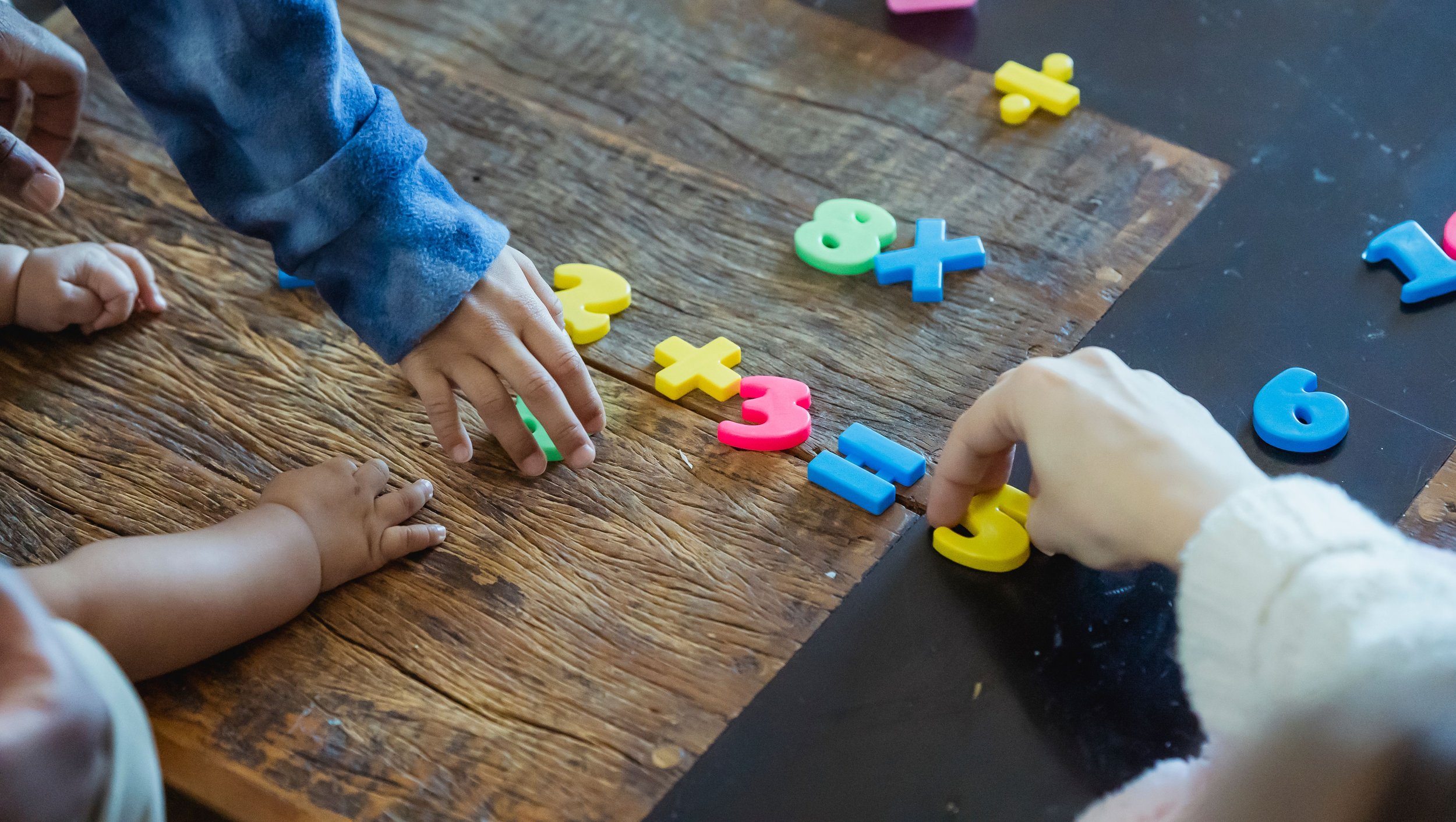
Maths tools to boost problem solving and working memory skills
Maths can be a tricky subject for children to master. Problem solving can be the hardest of challenges for many children. Even those predisposed with amazing abilities to remember and retrieve maths facts can struggle when presented with lengthy questions.
Parents of children with great memories are flummoxed as to why their knowledge, which is so evident, is not applied in these situations. It is puzzling, isn’t it?
A child can be brilliant with mathematical information yet with word problems they struggle to understand what the question is asking of them. Here lies the key to their struggles, flexible thoughts and the ability to match words with mathematical facts.
Year 1 maths questions:
1. Lisa is 130cm tall. Nina is 5cm shorter than Lisa. How tall is Nina?
2. Line segment A is 120 cm long. Line segment B is 95 cm long. How much shorter is line segment B than A
Each question requires the child to remember facts and organise their thoughts. This structuring is of prime importance in problem-solving.
Language structure and sequencing
We need to develop the skill of organising our thoughts long before we need it for solving maths problems. It starts with talking and reading. Take the example below (taken from our language programme Fast ForWord.) Which of the four statements matches the picture? You have to think, don’t you? It is the same sort of organised thinking as the maths questions above, and if you had difficulty with one, then you will probably have difficulties with the other too.

What do you see?
The obstacles children have to problem-solving
This sort of difficulty can be grouped under one umbrella of ‘language-based difficulties.’ Children with language-based difficulties can also have a hard time learning to tell the time when using an analogue clock.
What other sorts of obstacles are there and where does your child need help when problem-solving? Answer the following questions to find out::
1. Can your child retrieve maths facts?
Being able to workout or retrieve maths facts requires a skill of using both memory and retrieval. That is a lot of activity required in one action. This type of activity calls upon working memory.
Eliminating or establishing if ‘working memory’ is a concern can be worked out by answering this simple questionnaire!
2. Can your child organise things in a logical way?
Organising requires pre-maths skill. This includes knowing the order of days of the week, or the months; alphabetically ordering words; and sequencing things in numerical order. This is a skill that can be developed with practice.
3. How are their listening and talking skills?
When a child gets confused with understanding what others are saying, or expressing what they want to say, they may not be processing information in the proper way. Look out for jumbled ideas and help them find the key point of what they talk about.
4. Does your child skip or re-read words?
If your child skips words or re-reads the sentence when reading a maths problem, then they may miss crucial information for answering the question. This can be caused by poor visual tracking.
You can read about visual tracking more here. If you wish to seek guidance on any of the issues mentioned in this blog, know we are one call away.
Dyslexia? Dyspraxia? ADHD? ASD? Speech & Language? Developmental Delay? Anxiety?
Is every school day a struggle? As a parent, you may feel exhausted and on this journey alone. Each year you see the gap getting wider. You need to do something - change the approach, help your child learn for themselves, find a way to turn this around - to help while you can - do this NOW. the first step is free.
