
Symmetrical Tonic Neck Reflex - STNR
How we help a retained STNR
Primitive Reflex Integration Therapy - London
What is the Symmetrical Tonic Neck Reflex (STNR)?
The STNR emerges in the 13th week in utero, continuing to develop after birth. It is most is active from between 6 and 10 months of age when the infant starts to crawl on all fours. The infant first rocks on the same spot and then once they are able to balance their torso on their limbs they begin to crawl. This integration starts in the 10th month, at which point it becomes part of the infant’s whole-body movement. It can also be described as linking the two halves of the body, the upper and lower. STNR should not be present beyond the 12th month of an infants life or after they have learnt to crawl if they are late to reach this point. The successful integration of the STNR is related to the ability to move the head independently of the arms and legs, and to move the limbs independently of the head.
What happens when this reflex is retained?
A child with a retained STNR may have difficulty coordinating the upper and lower halves of the body at the same time. In infancy, it may have been observed that getting into the crawling position was a challenge; although the infant may have rocked, the equilibrium needed to distribute weight on the hands and knees may not have been achieved. On all fours, moving the head forward would have caused the elbows to bend and the legs to stretch, ending with the head falling to the floor. Alternatively, moving the head backward would have caused the arms to straighten and the knees to bend, leaving the infant sitting on their bottom. In a retained STNR the head position is locked together with the straightening of the upper or lower limbs, crawling would not have been successfully achieved. Instead, the infant may have bottom shuffled and was often observed sitting in a W-position. The importance of crawling lies not only in achieving mobility but also in developing binocular vision (the eyes working as a team to focus on a single object) as the infant focuses on objects in the distance for the first time. Crawling also begins the process of moving opposite limbs in tandem (left arm with right leg, right arm with left leg), which forces the two hemispheres of the brain to work together and makes bilateral coordination possible for a natural walking gait. The child with a retained STNR is likely to have poor spatial awareness and may bump into things or struggle to throw and catch. Sitting still may also be physically uncomfortable for the child, as the arms or legs want to extend depending on head position, which can be misattributed as a symptom of ADHD. A retained STNR can also affect visual and auditory processing. STNR can be retained until it is integrated, symptoms can persist into adulthood if left untreated.
Retained STNR Symptoms
Anxiety around physical activity such as monkey bars, or catch
Difficulty reading and writing
Time blindness
Poor posture
Wraps legs behind chair legs
Eye-tracking issues
Struggles to hold their head up, props their head with their hands
Tension in neck and lower back
Weak upper body
Not crawling or limited crawling as an infant
Poor balance and coordination
Difficulty making friends
Difficulty sitting still
Copying information from the board
Lack of spacial awareness
Poor proprioception (body awareness)
Frustration
Avoidance behaviours
How long does it take to integrate a Retained STNR?
A Retained STNR is often disguised as part of most neurodivergent conditions such as ADHD, PDA, ASD, Dyslexia, DCD, and can outwardly show itself as low or high-level anxiety as the person is not comfortable with being seated for a long duration, keeping visual focus or challenged with balance and spatial understanding. Integrating the STNR should be done in tandem with other retained reflexes and never in isolation. It takes around 8 to 9 months of continued work to integrate STNR and this is always along side other retained reflexes present. There are a variety of individual and assisted exercises that will support the STNR’s integration. Each part of integrating the STNR reflex will progressively build on the previous progressively.
How do we integrate Retained Primitive Reflexes?
We use MNRI (Masgutova, Neuro-Sensory-Motor, Reflex Integration as part of our One-to-One Therapy Intervention. Your child will have a Reflex Assessment as part of their ongoing work to address academic or developmental challenges. These challenges can be part of a diagnosed condition, or the symptoms may exist on their own. Once the assessment is completed, we provide you with a summary document that lists your child’s reflexes and the state of maturity of each one. The reflexes are addressed as part of the ongoing therapy at home and during the weekly sessions. This holistic approach covers all bases in terms of addressing the underlying cause of developmental gaps as a result of both Primitive Reflexes that are not integrated and the repercussions in an academic setting to address behavioural patterns. Addressing Primitive Reflexes is one part of the service being offered to help children achieve their optimum in all areas of development emotionally, physically and academically.
For parents who live further away or just want to have their child’s Reflexes Assessed we offer an abridged solution. First, your child has a 50-minute Reflex Assessment. You then book a block of sessions to learn what you must do to help integrate all the reflexes presented in the assessment. You will see results in a matter of weeks. Seeing progress in your child does not mean the reflex is fully integrated, but it shows your child’s reflex development is progressing, allowing for high-level skills. Allow 8 to 9 months of continued work for reflexes to be fully integrated.
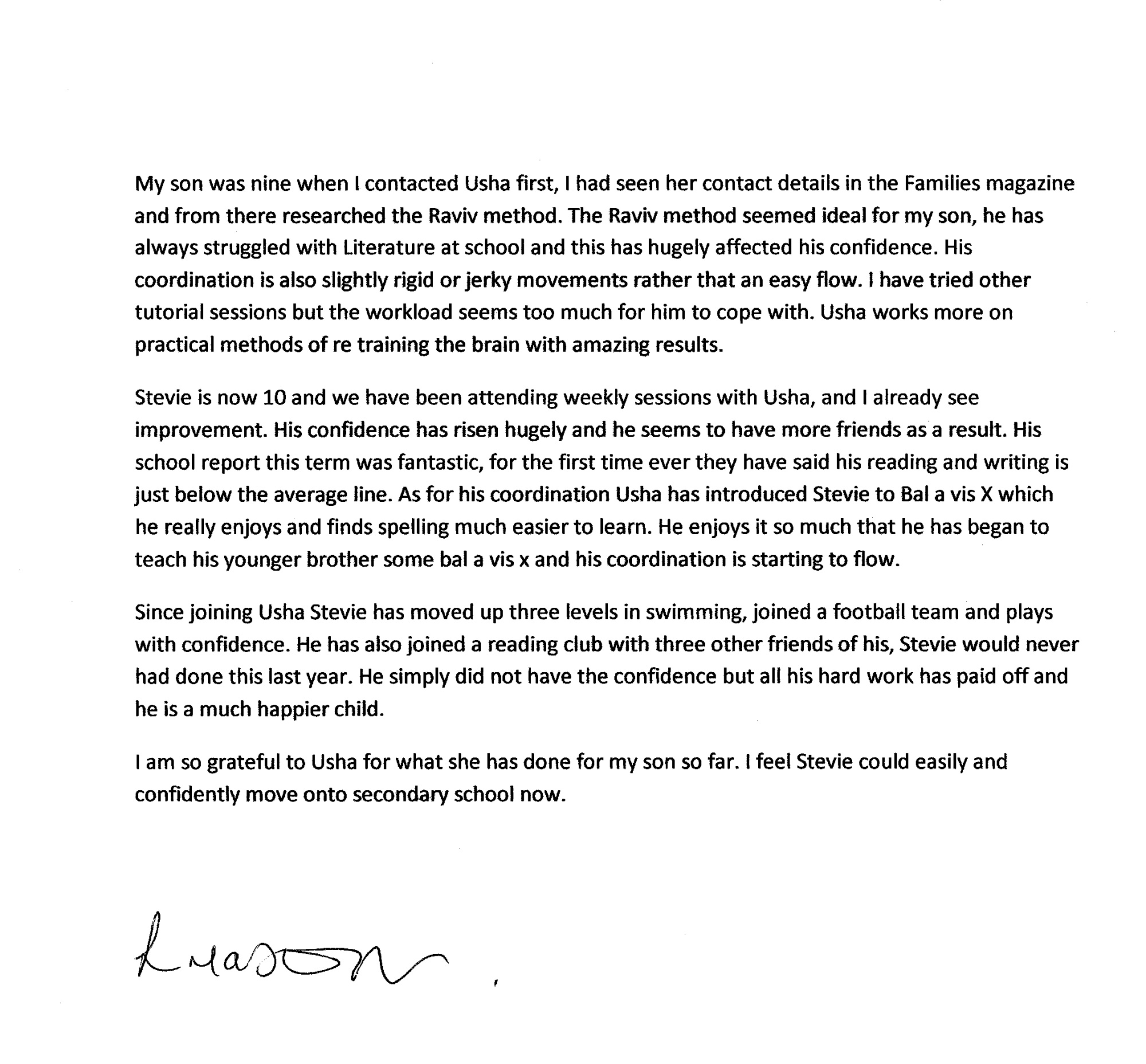
What are the results?


What should I do next?
If you are interested in the One-to-One Therapy Intervention for a holistic approach start by completing this questionnaire.
OR
For a stand-alone Retained Reflex Integration Assessment use the link below to book an appointment.