My child with Autism hates hand dryers.
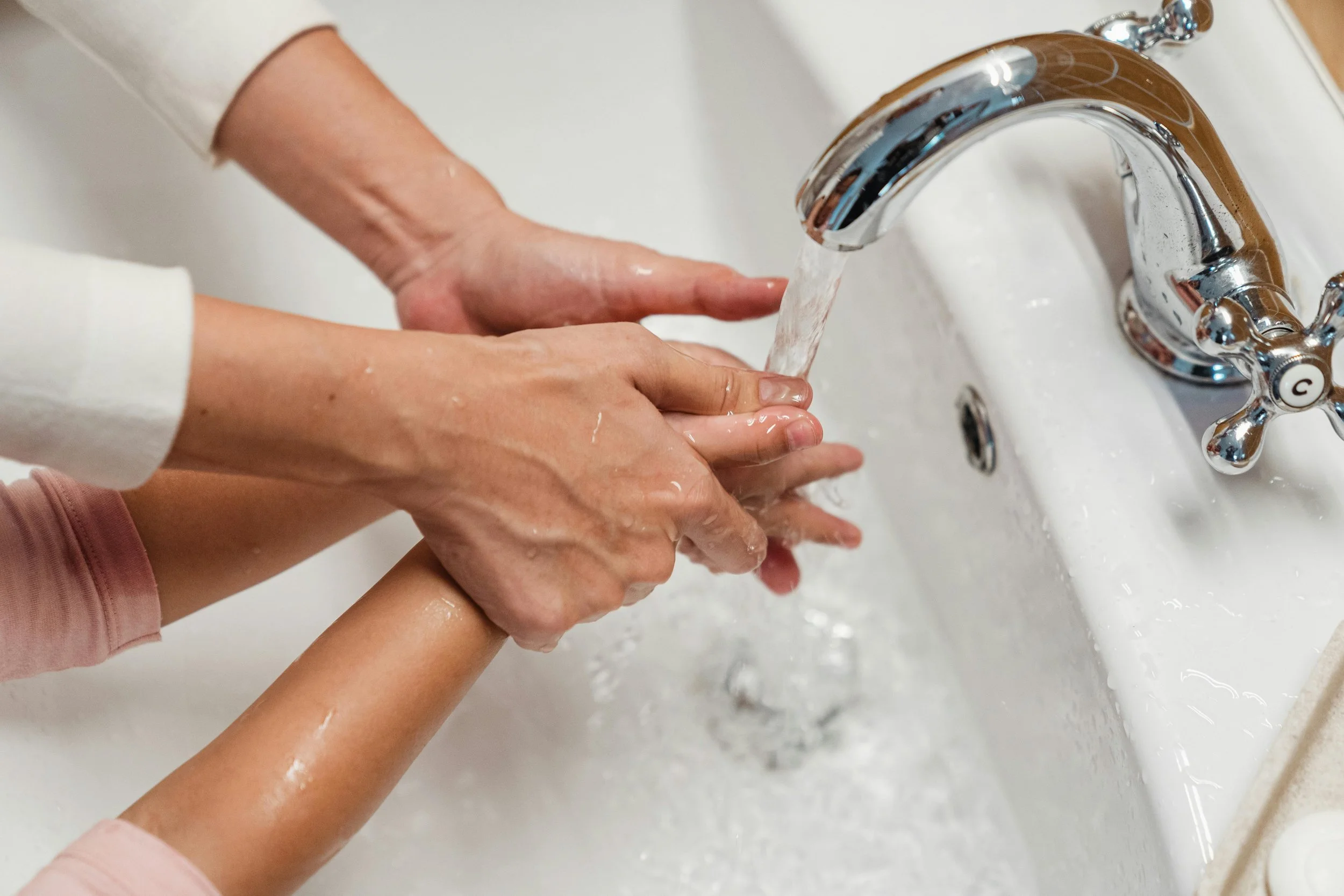
Many parents of children on the Autistic Spectrum describe the same experience. They enter a public washroom, and, without warning, the hand dryer switches on. Their child instantly covers their ears, cries, freezes, or attempts to escape. Over time, it is reported, these children begin to avoid public toilets altogether and avoid going out for fear of having to use the bathroom.
“Hand dryers create a perfect storm for a sensitive nervous system”
This response is often misunderstood oversensitivity, or behavioural difficulty. In my therapy work I see something very different. A strong reaction to abrupt loud sounds, such as hand dryers, is frequently a sign that a child’s nervous system is locked into a state of fear and does not feel safe.
Understanding the neurological and trauma-related roots of this response is essential if we want to help children truly regulate, rather than simply cope.
Why hand dryers feel overwhelming (and any loud noise for that matter)
Hand dryers create a perfect storm for a sensitive nervous system. They produce sudden, loud, unpredictable noise combined with vibration and strong bursts of air. For a child with Autism whose nervous system is already on high alert, this sensory input can feel threatening.
The problem is not simply the volume. It is the lack of warning. The brain has no time to assess whether the sound is safe, so the nervous system reacts instantly. This reaction bypasses rational thought and activates the body’s survival systems.
For autistic/neurodivergent children, there most probably is a history of early stress and developmental trauma, so these sudden experiences are processed as danger rather than neutral input.
“When both reflexes are retained, it keeps the nervous system locked into a state of hyper vigilance.”
The role of retained reflexes
The primitive reflex most central to understanding sound sensitivity is the Fear Paralysis Reflex
The Fear Paralysis Reflex (FPR) is triggered by sensory stimuli such as auditory, visual, or tactile input—for example, a loud sound, an unexpected flash of light, or uncomfortable touch. The Fear Paralysis is a reaction of where arms and legs get drawn into the child’s body as well as the child appearing to freeze. FPR is a reaction where it elicits a freeze response of complete fear paralysis. (note some practitioners say the FPR should not be present at birth and others say it developed into the startle reflex as adults, there is a lot of debate about this reflex)
“Living in a constant state of alert places enormous strain on the nervous system”
Another important reflex that associated with being startled is the Moro Reflex. The Moro Reflex emerges around the same time as FPR. It is triggered by body position and sensory stimuli such as auditory, visual, or tactile input, including loud sounds, similar to the FPR. The Moro reaction is observed as the arms flinging out followed by coming into the body. While it can be confused with FPR but instead of a total paralysis there is the tendency to go into fight or flight. In this scenario the child would cry, get angry or run away from the perceived threat. The Moro reflex needs to be integrated by six months after birth. If, however, there has been a history of trauma stress to the developing infant the Moro which should integrate gets entwined with the Fear Paralysis Reflex and both become reactionary when the child is frighten.
When both reflexes are retained (not matured) it keeps the nervous system locked into a state of hyper vigilance. The child feels unsafe even in familiar environments.
Children with retained Fear Paralysis and Moro reflexes appear very vulnerable and scared. They are not choosing to behave this way. Their nervous systems are on high alert. This is why these children often appear anxious, reactive, or overwhelmed in anticipation to a possible threat.
How making you part of the Safe and Sound process can help you and your child make a positive change
How sensitivity to noise affects daily life.
Sound sensitivity rarely occurs in isolation. Children who fear hand dryers may also struggle with school assemblies, fire alarms, noisy classrooms, or busy public spaces. Over time, this can lead to avoidance, heightened anxiety, emotional shutdown, and fatigue.
Living in a constant state of alert places enormous strain on the nervous system. These children are expending energy simply trying to feel safe. Learning, social engagement, and emotional regulation become secondary.
When sensory responses are misunderstood, children may be pushed to tolerate environments that feel unsafe to them, reinforcing stress rather than building resilience.
How SSP/Primitive Reflex Integration, helps those locked in fear.
At Raviv Practice London, it is essential to address sound sensitivity in the correct sequence.
It is not always possible to work on the Reflexes if the child does not allow anyone to go near them. Touching them to implement the therapy would be near impossible for child who is in state of constant fear. When trauma is so deeply ingrained, and the nervous system is locked into a fight/flight (Moro) or freeze (FPR) state, we must first establish safety. This is why in such cases I often begin with the Safe and Sound Protocol (SSP). SSP is a listening therapy designed to calm the autonomic nervous system and reduce fear-based reactivity. This work is done at home, where the parent first does the SSP work (with me guiding them). It is important to understand the parent will be absorbing their child’s anxious fearful state, so they need the therapy as much as their child. The SSP is developed by Dr Stephen Porges, and links to his discovery of The Polyvagal Theory.
Once the nervous system begins to feel safer, we can introduce Primitive Reflex Integration Therapy. Using gentle, structured developmental movements, retained reflexes such as the Fear Paralysis (FPR) and the Moro reflex can gradually integrate. As this happens, the nervous system becomes less reactive, and tolerance to sound improves.
Parents often notice fewer meltdowns, reduced anxiety, and a greater sense of emotional stability. Importantly, this work supports not only sensory processing but also learning readiness and overall well-being.
If your child reacts strongly to loud noises or seems constantly on edge, they will not be able to learn with ease. The process is complicated but with such early primitive reflexes in a state of confusion there is a lot of work to undo.
At Raviv Practice London, I assess the neurological and trauma-related roots of sensory sensitivity and provide individualised programmes using Safe and Sound Protocol and Reflex Integration Therapy. I invite you to book an initial consultation to explore how supporting your child’s nervous system can help them feel safe, calm, and confident in everyday environments, so you are free to have those days out when bathroom breaks are not a source of trauma to your child.
Want to discuss your child and see how we can help? Book here
Dyslexia? Dyspraxia? ADHD? ASD? Speech & Language? Developmental Delay? Anxiety?
Is every school day a struggle? As a parent, you may feel exhausted and on this journey alone. Each year you see the gap getting wider. You need to do something - change the approach, help your child learn for themselves, find a way to turn this around - to help while you can - do this NOW. the first step is free.
